When I first decided to move on to acreage, it was with full knowledge that I was signing up for a lot of work, not just on the land, but also with all of my animals. I’m single and that means that all the work falls to me. When I got my animals, I knew that the goal was to be in a situation similar to where I am now. In hindsight, I’m really grateful that I had the foresight to choose cold hardy animals. I did my research on my chickens and chose breeds that would do well in very cold, very snowy or rainy weather. I looked into the Pygmy and Nigerian Dwarf goat breed and made sure that they were cold hardy as well. This has been evidenced by the soft, wooly undercoat that has made my goats look extra fluffy. So here we are, perhaps coming out of my second winter (I don’t think Mother Nature has decided yet) and everything I thought I knew has gone in the shitter and I’m working much harder than I ever thought I would. So here is what I have learned in the winter…so far…
- Be prepared to be unprepared. I knew going into the winter that I didn’t plan to supplement heat. I live on the plains west of Spokane and it can get very windy here. Losing power is a very real concern and heat supplementation would be disastrous if the chickens had it and we lost power in freezing weather. So instead, I wrapped the chicken coop in insulated tarps so they could use their own body heat to heat it up, I covered the chicken run to keep snow out and decided to use the “deep litter method” inside the coop to make sure the chickens are warm enough this winter. I don’t have power near my coop so I prepared myself to do everything manually, but as the temperature dropped…and dropped…and dropped…and then stayed really low…I realized that I wasn’t going to be able to continue to provide them with water consistently, because it started to freeze the minute I switched it out! I was replacing water at least twice a day and it still wasn’t enough. I gave in and went and bought a couple extension cords and a heated platform for the waterers I was using. I’m not thrilled with the method (I’m terrified by the threat of fire) but I made it as safe as possible by covering where the cords meet, either with an extension cord cover or duct tape and plastic. The other part that I was not prepared for was moving 50-pound bags of feed and bales of hay around my property. My mom suggested I get a sled to move hay from the hay barn to the goat barn. I thought that idea was inspired and am planning on doing so. Some days it’s not so much snowy as it is icy, which requires slower steps to ensure sure footedness. This also takes longer and leaves the weight on my arms and back longer. I read an article once that suggested getting into shape if you plan to have this sort of lifestyle and I would highly encourage it if you were someone considering it!

- Some of your animals may not like winter. My Border Collie mix absolutely loves the snow. When I took him out for the first snow of the season he lost his mind darting around and digging his snout into the snow, only to gleefully throw it all up in the air…and all over me. He loves, loves, loves snow (which makes one of us). My other dog is Nigel. He is less than impressed with all the white stuff. My chickens are also iffy about the snow and the goats hate the stuff. More than once I’ve had to bring one chicken (Sweet Violet is adorable, but a couple crayons short of a box) inside to dry her off because she got wet down to her down feathers. She can’t stay warm with wet feathers, so we had to brave the inside of my house with my chicken killing dog to get her dry again so she can stay warm. The goats will stand in the barn door, where the barn stops and the snow starts in the pasture, and holler at me across the property because they refuse to walk out in it. It’s hysterical and maddening all at the same time.
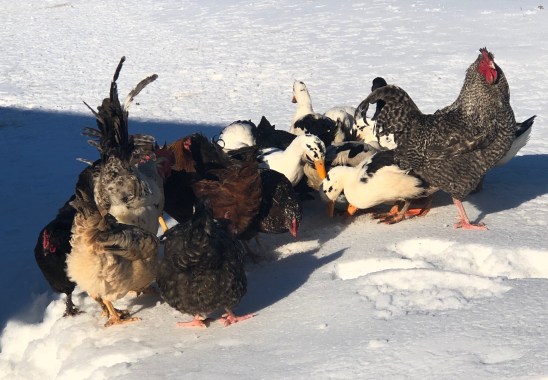
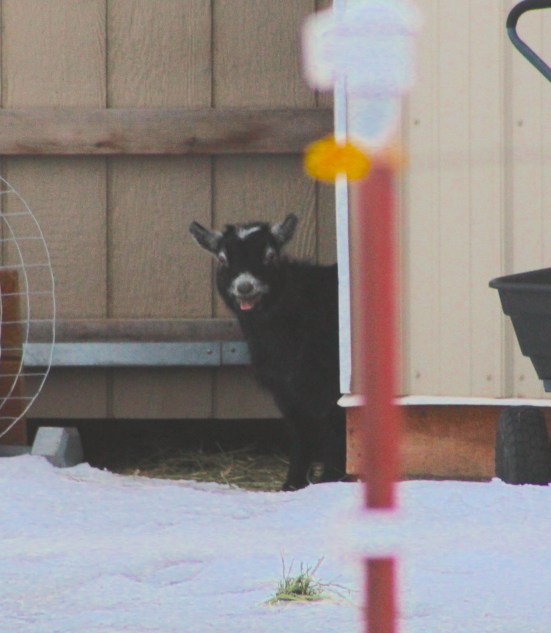
- Useful tools. A good snow shovel! When I moved onto acreage my mom told me to spend the extra money to get a sturdy snow shovel. When the first snow came, there was a lot, but it was very powdery and extra light. I thought, Geez, I didn’t really need to spend $40 on a snow shovel. Fast-forward to the icy snow that blanketed my front porch last week…I’m really happy I took that advice. Having a shovel break in the middle of trying to move that snow around would’ve made for a rough day on the farm. I have two shovels: one on my porch and one in my car, which I use around the property. I also have invested in a snowblower. I can’t wait to take that baby out and blow some snow. Waterproof, insulated gloves! Before I ran an extension cord out to my coop, I had to check water constantly to make sure it wasn’t freezing. Sometimes I could catch it just as it was beginning to freeze and I could use a finger to break the ice and scoop it out of there to save myself a trip with a 3-gallon waterer back to the pump house where my only outdoor spigot is, across ice in my (day job) work clothes. This is the time I was really impressed with myself for having the foresight to have waterproof gloves. Ice water on your finger in the middle of winter is not comfortable and my gloves saved me once or twice. Or ten times. A lot.
- What to do if you get sick. Suck it up, Buttercup. One year, I got some kind of stomach bug, and it was the sickest I’ve been in my adult life. I’ve never experienced anything like it. And I had to call my mom in for reinforcements, because I couldn’t peel myself off the bathroom floor. She drove 45 minutes at 5:00 am, because she is a saint and an angel, to help me take care of my animals. I’ve mentioned that it’s only me out at my place. I’m the only one who can feed and care for all the animals, the house, the property, and myself. So what would I have done if my mom was unavailable? I would’ve sucked it up, Buttercup. This is a really good time to encourage anyone reading this post and considering a life on the farm to really take your health seriously. Puking for hours and spending a feverish day on the bathroom floor is brutal and not conducive to running a successful farm business. I’m lucky that my mom was available to help and that my farm is in very early stages. This could really have been much worse.

- You’re going to mess up. Again. YOU ARE GOING TO MESS UP! I’ve walked out in the morning to find that I didn’t close the chickens into the chicken coop. I’ve walked out to check on the goats only to realize that they had run out of hay in their manger. I mis-scheduled my regular workday and kept my dog in a crate for 12 hours and forgot that I needed to check the brooder temperature and the chicks were way overheated when I got home. It happens, friends, you just do your best and try not to mess up again. When I started this journey into Villam Meam Farm I read a lot…I mean A LOT…and figured out the mistakes that other people made so that I could try not to make them, too. But you know what? I still did sometimes. Luckily, it hasn’t been to the detriment of my animals so far, but I’m not very far into this journey. There’s still time for catastrophic results. So, again, you just do your best.
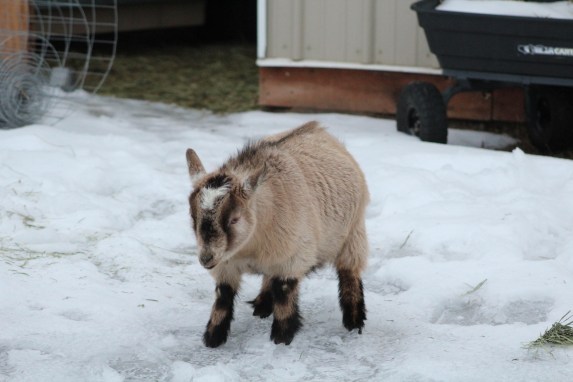
This list of what I’ve learned so far is certainly not exhaustive and I fully expect to update this post in future winters. I am combing through other folks’ blogs to see what I can learn from them. What have you learned from being on the farm in the wintertime?
 villammeamfarm.com